
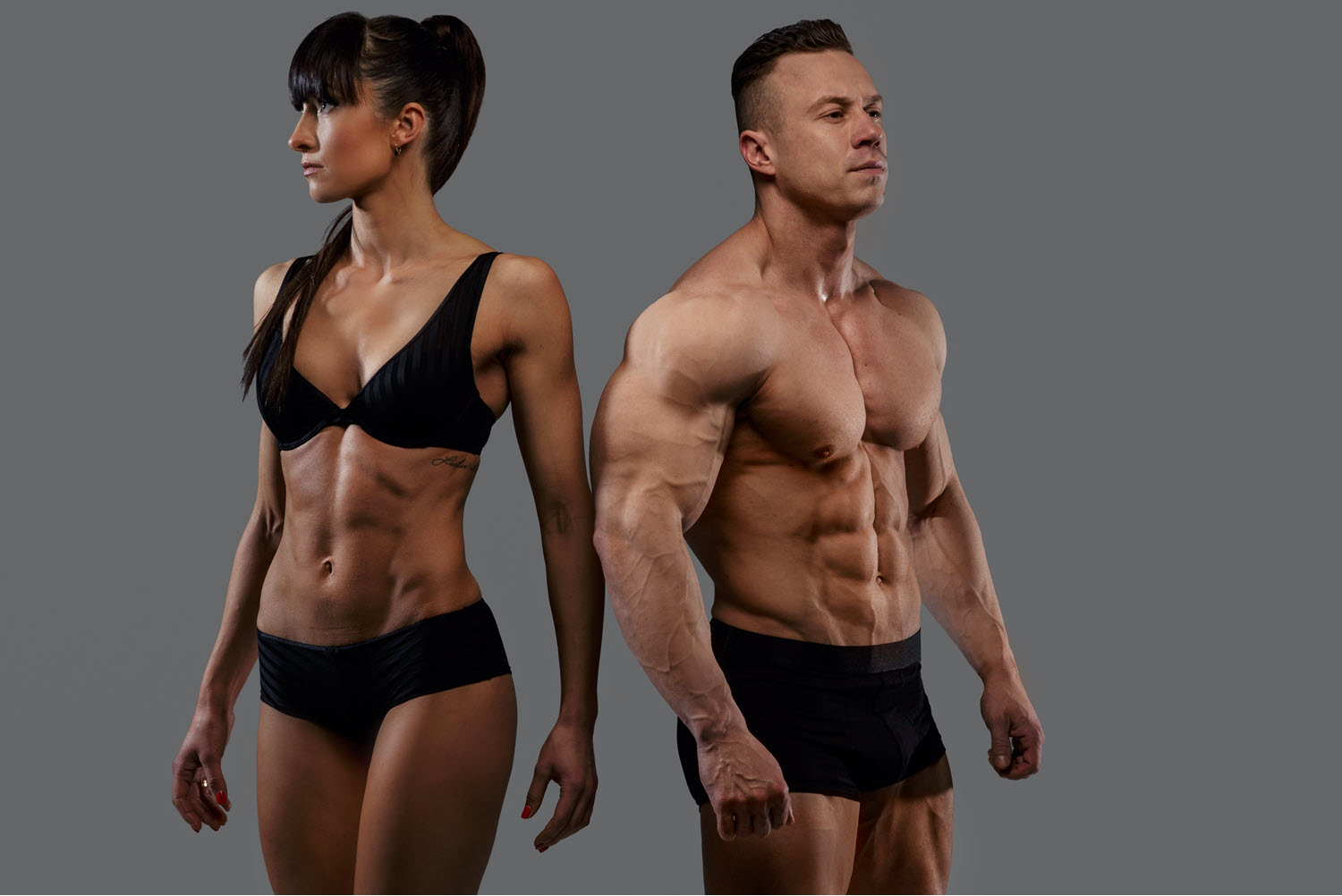
When I was in college, I had a workout buddy that would say, “Train for go, not for show.” His point was that we should focus on our capacity, not on how we look, as our motivation for working out.
I’ve done my best to internalize this ethic, but in the 15 years of training since, it hasn’t totally taken hold.
I want to be buff and sexy. I know all the acculturation and conditioning that went into building that as a drive, but it is a highly efficient motivator for getting me in the gym and keeping me focused while I’m there.
I want to project a particular image of myself in the world. When I look in the mirror and see something that runs counter to that, my ego takes a hit.
But sometimes, life has other plans.
My entire fitness journey since March of 2020 has been about managing a couple of very nasty injuries – first, a stubborn bout of tendinitis in my left arm, and then a large-scale tear in my right rotator cuff, just before the new year.
All my goals about getting buff and sexy went out the window. Starting with the tendinitis, all I wanted to do was restore function. I couldn’t play the guitar; I couldn’t do a pull-up; I couldn’t do a handstand.
When I injured myself back in November, I lost all range and rotation in my right arm. My bicep tendon had slipped out of its groove. I had full-thickness tears in my subscapularis and labrum. I couldn’t lift my arm more than a few inches from my body.
When I went in for surgery, we spent Christmas in Manhattan at a hotel near the hospital, eating Indian takeout and watching bad comedies. When I stood in front of the mirror as we were packing up to come home, I was mortified.
The holidays, the injury, and the exquisite Indian food of Murray Hill had all conspired to make me a sloppy, hobbled version of myself.
And that’s not the end of it.
I’m also aging. My body doesn’t respond to exercise the way it used to. The image looking back at me in the mirror will keep changing, and there is nothing I can do about it.
It’s easy to get discouraged when we consistently take action and don’t see the progress we expected.
Or when we make progress, and something knocks us back to Square 1.
Here’s an argument for why process goals should make up the majority of our quarterly goals and for creating some outcome goals for our fitness that are rooted in function instead of just aesthetic.
Improvement is better than a cure.
Cure is a snapshot of an ideal. Much like the ideal of a perfect aesthetic, it’s frozen somewhere in our self-image.
But improvement is an endlessly gradient journey on the way to that ideal.
If my image in the mirror forsakes me, I can still ground my self-image in my ability to increase my power, grace, and agility.
Even in the case of decline, impediment, or injury, I can find some vector of improvement from right where I’m standing.
Holding goals for performance, coordination, or function in front of us provides a constant source of concrete feedback and offers us infinite possibilities for achieving benchmark victories, week to week.
We can track any activity for Time or Task. We can also measure Task within Time and Time within Task.
I can go for a 45-minute walk, or I can go for a 3-mile walk. If I want to create more concrete performance metrics, I can count how far I walked in 45 minutes or count how long it takes me to walk 3 miles.
If I take even one more step in that 45 minutes than I did the week before, I can celebrate a little victory – no matter what the scale says.
This is a way I can turn capacity into an outcome goal. Tracking how many pushups I can do in a single set and how deep I can fold in a forward bend give me concrete frames of progress.
Learning to do a headstand or the foxtrot empowers us with a skill that we can enjoy doing for its own sake.
We can celebrate the activity or behavior as a process goal.
Whatever gets us out of the house for that morning walk – be it a target weight or the next performance benchmark – we can celebrate the fact that we did it.
I can anchor myself in that feeling of accomplishment and establish my self-image as someone who gets up early to go for walks.
Here’s a roundup of programs and teachers that emphasize functional movement as a central value for training.
Here is a motherload-repository of Feldenkrais’ Awareness Through Movement lessons.
https://www.feldenkraisaccess.com
Scott Sonnon is a martial artist – competitor, and coach. His training focuses on mobility and neuroplasticity.
Kelly Starrett is an athlete and physical therapist. He wrote a book called the Supple Leopard, and his online resource, The Virtual Mobility Coach, is a ridiculous value for the price.
Functional Patterns is a system that utilizes complex movements to build power and coordination across myofascial chains. They take an integrative approach to health and center their training in improving biomechanics to create more efficient movement.
https://www.functionalpatterns.com
GMB Fitness is a collaboration between a Gymnast, a Physical Therapist, and a Martial Artist. Their training sequences are all about moving better and developing functional strength that supports us in our everyday lives.